How to Choose Between a Sheet-and-Post and A Composite Truck Body
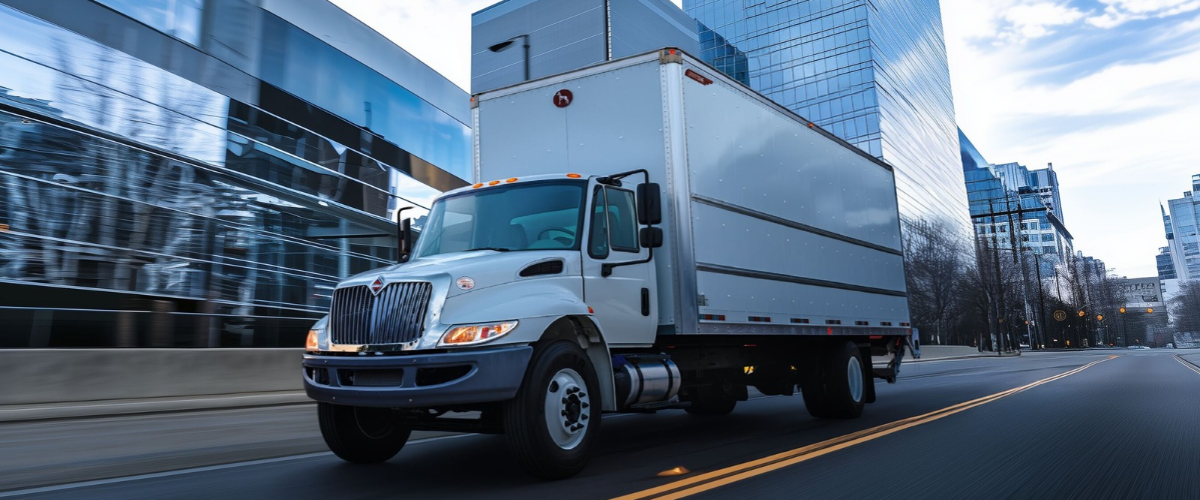
Choosing the right truck body construction is about more than what you haul. It is about how that freight moves through your operation every day.
Loading methods, delivery frequency, cargo securement, product protection and access requirements can all influence the right body configuration.
Instead of asking whether composite or sheet-and-post construction is simply “better,” start with a more useful question:
KEY QUESTION: What does your operation require the truck body to do?
Great Dane’s Sahara dry freight lineup includes composite and sheet-and-post construction, giving fleets two proven starting points for configuring a truck body around their freight and operating requirements.
What Is a Composite Truck Body?
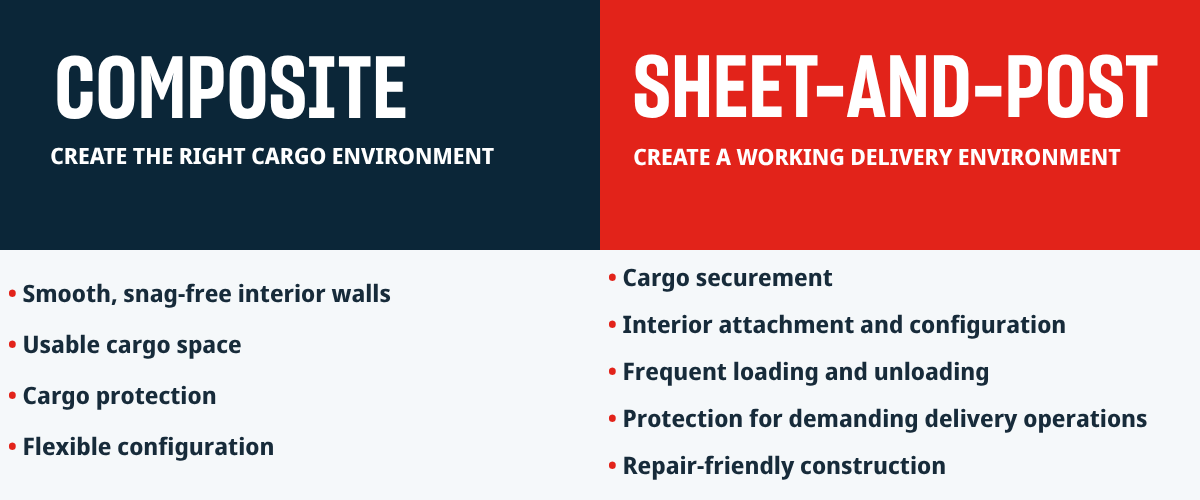
Composite construction uses engineered sidewall panels to create a smooth, clean cargo environment. For operations where usable cargo space, product protection, and flexibility are priorities, composite construction provides a strong starting point.
Sahara composite construction features smooth, snag-free interior surfaces that help simplify loading, protect freight, and make efficient use of interior space.
Big & Bulky Home Delivery
Furniture, appliances, mattresses, and other oversized products present a different challenge than dense freight. These products often fill the body’s available space before reaching maximum payload capacity, making usable cube and product protection especially important.
For these applications, a composite body offers a clean cargo environment well suited to protect large, high-value products during loading, transport, and delivery. Interior securement, protection, and visibility options can then be chosen around your operation’s specific needs.
THINK: Large cargo + usable cube + product protection.
General Freight & Logistics
General freight operations may move mixed cargo across changing routes and delivery requirements. That makes versatility especially important.
Composite construction creates a clean, flexible foundation that can be configured around your loading and cargo-handling methods. Protection can then be added where the operation needs it, including configurations designed around pallet-jack or forklift use.
THINK: Mixed freight + flexible handling + a versatile cargo environment.
What Is a Sheet-and-Post Truck Body?
Sheet-and-post construction uses exterior aluminum sheets supported by structural posts. Great Dane’s Sahara S-Series is built with replaceable sheets and posts, supporting straightforward service when damage occurs.
The structure also gives fleets flexibility to add equipment such as logistics track, horizontal slats, lining, shelving, and side doors. That makes sheet-and-post a practical platform when the interior of the body is configured for specific operational efficiencies.
Package & Parcel
Package and parcel operations move large numbers of individual packages through high-volume delivery routes. The body needs to support organized cargo, frequent loading, and efficient movement throughout the day.
For these applications, sheet-and-post construction provides a practical foundation for securement and protection features such as E-track and rear-door protection. The decision is not simply about freight weight. It is about creating an interior that supports a fast, route-intensive operation.
THINK: High product count + frequent handling + organized securement.
Beverage Distribution
Beverage distribution places a different kind of demand on a truck body. Heavy palletized loads, frequent stops, and high-volume routes create an operating environment where access, protection, and durability are critical.
Sheet-and-post construction provides a flexible starting platform for a body configured around that type of repeated route delivery. Depending on your operation, that configuration may include side-door access, lift-assist equipment, corrosion protection, and reinforced interior protection.
THINK: Dense freight + repeated heavy handling + demanding route delivery.
The Better Question: What Does Your Operation Require?
Freight weight or cargo volume alone should not determine the construction choice.
Package and parcel freight and beverage products can have very different cargo profiles, yet both may require interiors designed around frequent loading, securement, access, and protection. Big & Bulky and General Freight also differ from one another, but both can benefit from composite construction for different reasons.
A simpler way to evaluate the options is to focus on the environment the body needs to create:
Start With the Freight. Then Build Around the Operation.
Choosing a truck body should not begin with a long list of specifications. Start with the freight, then consider how it is loaded, secured, transported, and unloaded.
Those operating requirements provide a stronger foundation for choosing the right Sahara construction and the options that should go with it. Whether you’re delivering furniture, mixed freight, packages, or beverages, the goal is the same: configure the body around the work it needs to do every day.
READY TO FIND THE RIGHT FIT?
Explore Sahara dry freight truck bodies and connect with a Great Dane representative to get on the road with a dependable truck body.